

A swallowable bioprinter for treating wounds in the digestive tract
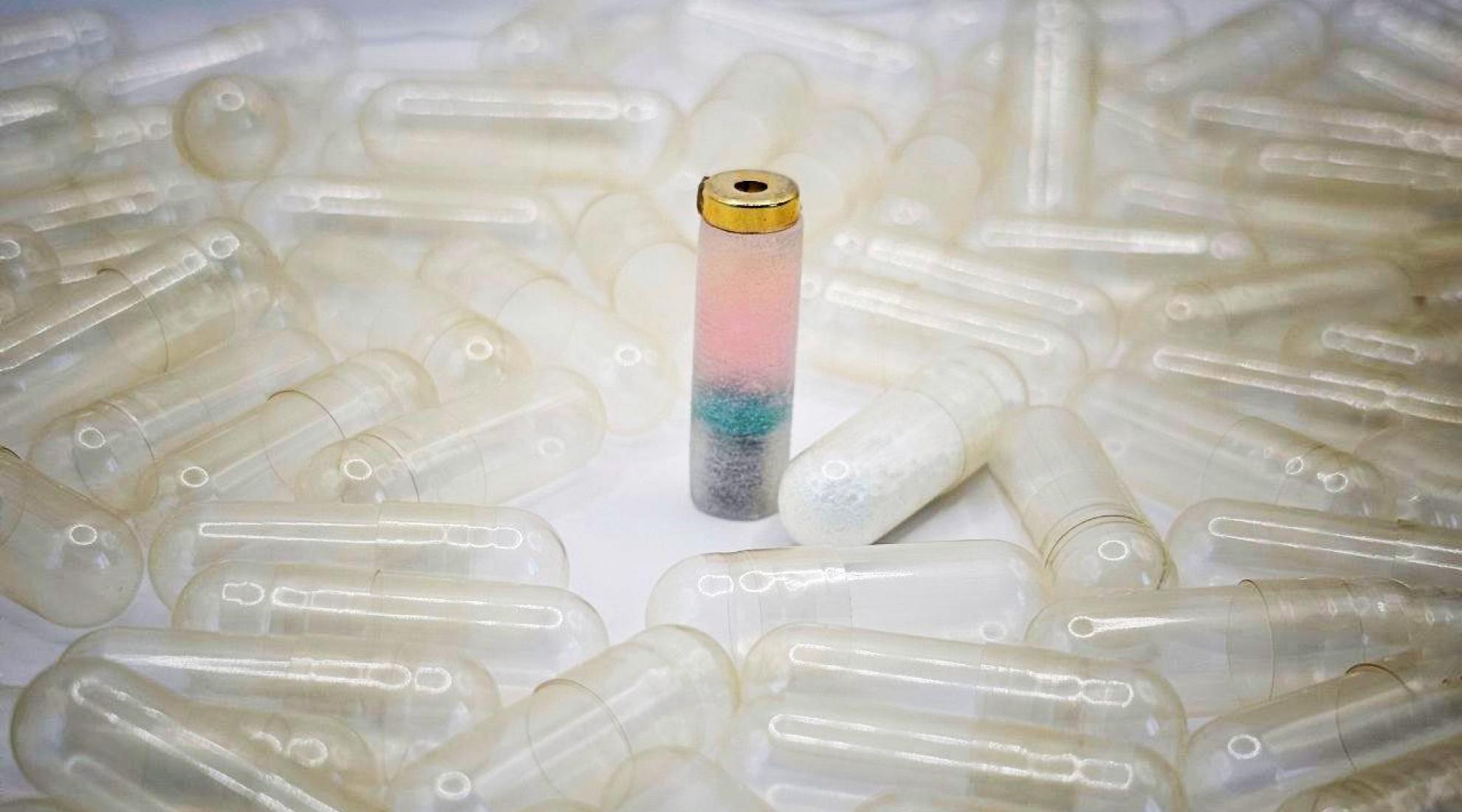
A new, pill-sized bioprinter developed by EPFL promises to treat gastrointestinal wounds from within, eliminating the need for surgery.
Related news
Technology that moves you

The wheelchair of the future – made in Switzerland

Keeping one step ahead of the next infectious disease
Currently, surgery is often the only option when doctors treat soft tissue injuries of the gastrointestinal tract, such as ulcers or haemorrhages. However, it is labour-intensive and carries risks. A research team at EPFL in Lausanne has now developed a device that sounds as if it came straight out of a science fiction film: a pill that can print tissue inside the body. The device is called MEDS (Magnetic Endoluminal Deposition System) and could one day help to repair wounds in the digestive tract without the need for surgery. In other words, rather than exposing tissue through an incision, the printer is simply swallowed and taken directly to where it is needed.
How it works
The swallowable printer, known as MEDS, functions like a miniature ballpoint pen, with a tip containing a 'bio-ink' made of biocompatible gel. This gel can contain cells, proteins, or substances that promote healing.
Once the capsule reaches the stomach, a magnet guides it to the exact point where it is needed. A brief pulse of infrared light then triggers a mechanism that releases the bio-ink at that spot. This allows the substance to be deposited precisely onto wounds, ulcers or bleeding areas.
Precise control through magnetic fields
Rather than being activated electrically, the pill is activated by an infrared laser directed at the body from outside. This light penetrates the skin and triggers the release mechanism inside the capsule, ensuring the bio-gel is dispensed directly to the damaged tissue.
Magnets are used to guide the capsule to the correct location. An external magnet mounted on a robotic arm can move the pill through the gastrointestinal tract with joystick-like precision, allowing operators to direct it.
A new concept for smart capsules
The idea is not entirely new. There are already ingestible 'smart capsules' that release medication in a targeted manner. These typically travel through body fluids with the help of external magnets, but can become unpredictable when they come into contact with tissue. Bioprinting, on the other hand, requires direct contact with tissue in order to apply material accurately. MEDS achieves this, which is what makes the technology so promising.
By combining the principles of in-situ bioprinters with the drug release concepts of smart capsules, we can envision a new class of device: a pill-sized, swallowable bioprinter.
Successful in the laboratory
In initial tests, the EPFL team trialled the bioprinter on simulated gastric tissue. MEDS was able to repair tissue damage of various sizes by applying a protective layer of bio-ink. It even succeeded in stopping a simulated bleed. The first in vivo experiments with rabbits were also successful. X-ray imaging showed that the pill could be navigated safely and release its bio-ink in a controlled way. Subsequently, the capsule was removed orally using a magnet, rendering surgery unnecessary.
Alongside further studies to validate the initial results, the researchers plan to extend the technology's capabilities to include blood vessels and abdominal wall tissues.