

A computer mouse that can go in the compost
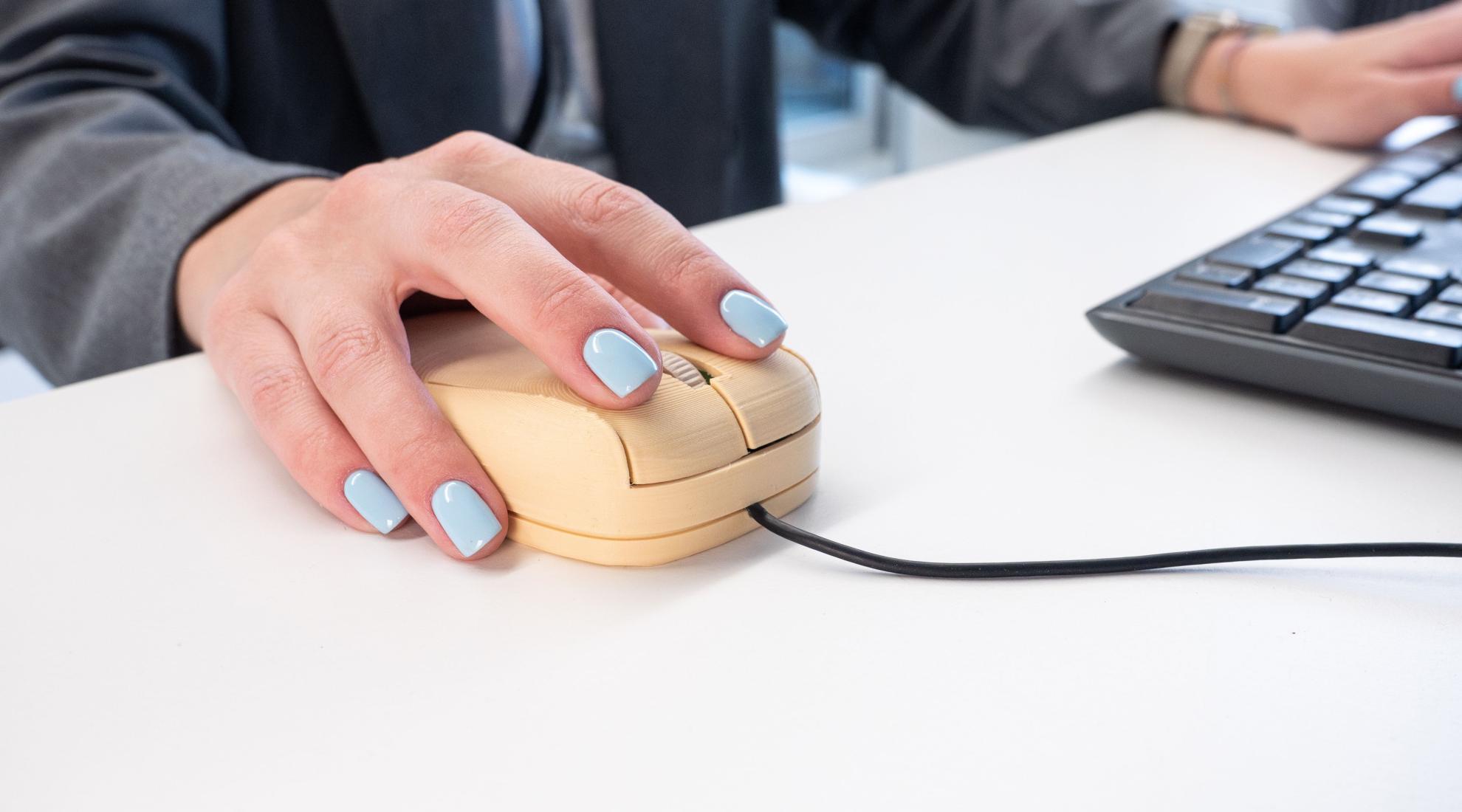
For the first time, a research team has succeeded in producing a biodegradable circuit board made from wood cellulose.
Related news

Swiss drones are flying high

In search of Earth's sibling

Swiss technology hunting space debris
Circuit boards are found in smartphones, laptops, coffee machines and electric toothbrushes, forming the backbone of modern electronics. However, millions of tonnes of them end up as waste every year, and recycling them is almost impossible. They are usually made from fibreglass and epoxy resin, a petroleum product. The main advantage and disadvantage of this material is that it lasts practically forever.
Researchers at the Swiss Federal Laboratories for Materials Science and Technology (Empa) are working to ensure that the future of electronics is genuinely green. The first prototypes already exist: compostable circuit boards and computer mice that can be thrown on the compost heap after use.
From wood to electronics
For years, Empa researcher Thomas Geiger and his team have been working to make cellulose, the fundamental building block of wood, usable for electronics. Their work is part of the EU research project HyPELignum, which aims to make electronics CO₂-neutral. To this end, project partners from the worlds of research and industry are combining wood-based raw materials and the least problematic transition metals with additive manufacturing techniques. In this instance, the Dutch research institute TNO has developed a process to extract lignocellulose from wood. This substance forms the cell walls of woody plants and acts as their structural framework, making it one of the world's most abundant renewable raw materials.
Hardly any difference from conventional circuit boards
Originally regarded as a waste product of wood extraction, this material now serves as the basis for a new type of circuit board. To produce it, Empa researchers grind the lignocellulose in water until only fine fibrils remain. The result is an extremely thin fibre network. The water is then squeezed out under high pressure. The fibrils bond tightly together, drying to form a solid sheet. The researchers call this process 'hornification'. The lignin it contains acts as a natural adhesive. The outcome is a firm, stable board onto which copper traces and electronic components can be applied. The finished material is almost as durable as conventional circuit boards.
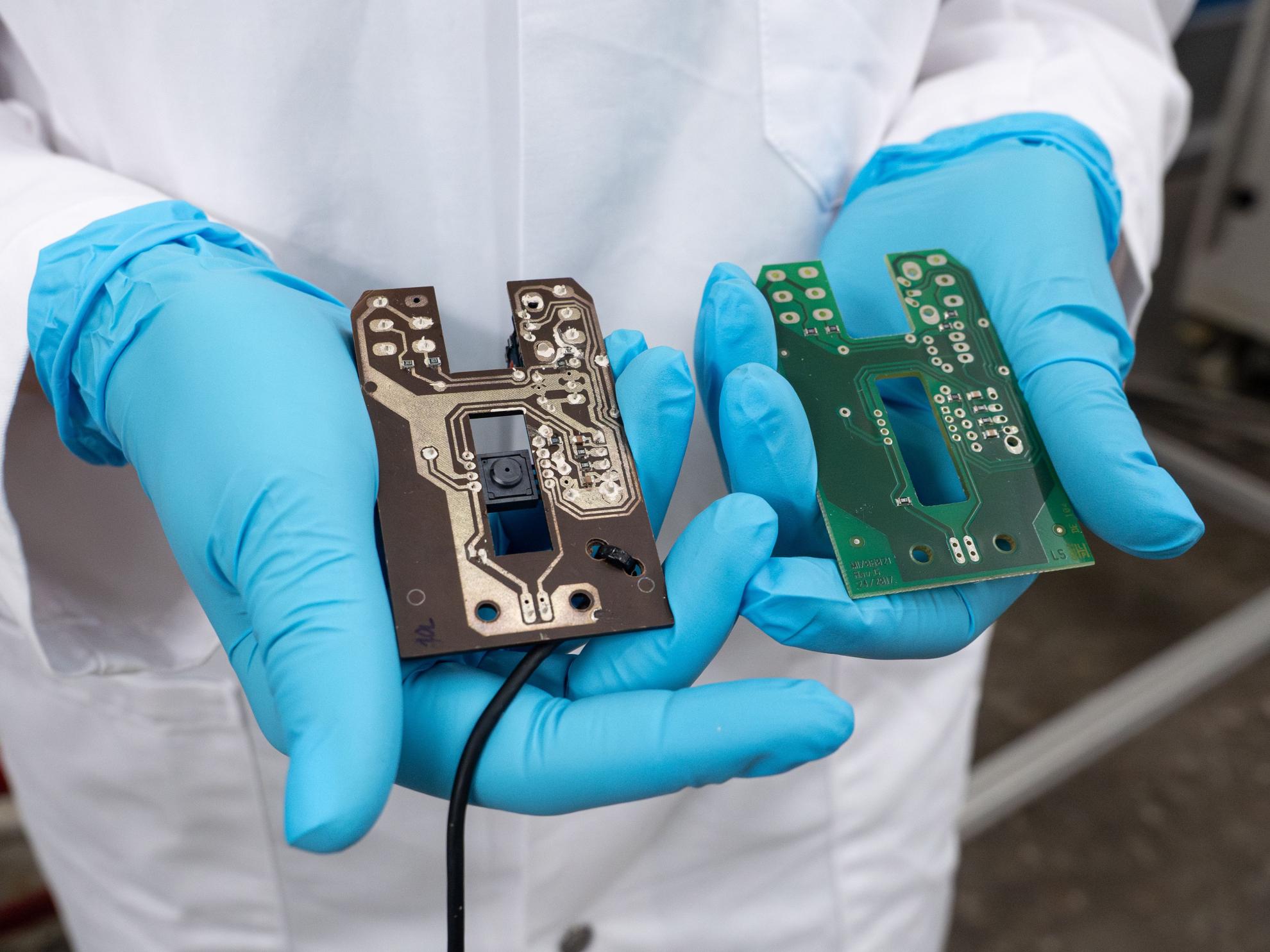
A conventional green circuit board (right) compared with Empa's compostable prototype (left).
A wooden mouse as a test object
In an age of short-lived, disposable electronics, the researchers believe that such compostable circuit boards have plenty of potential applications. To prove the concept works in practice, Empa’s Austrian project partner Profactor printed circuit paths onto hornified boards and mounted electronic components on them. The result was fully functioning devices, including a computer mouse and an RFID card. Appropriately, the prototype mouse has a wooden casing and can simply be put on the compost heap at the end of its life cycle. The next steps are to transfer the technology to industry and to further improve its resistance and durability.